
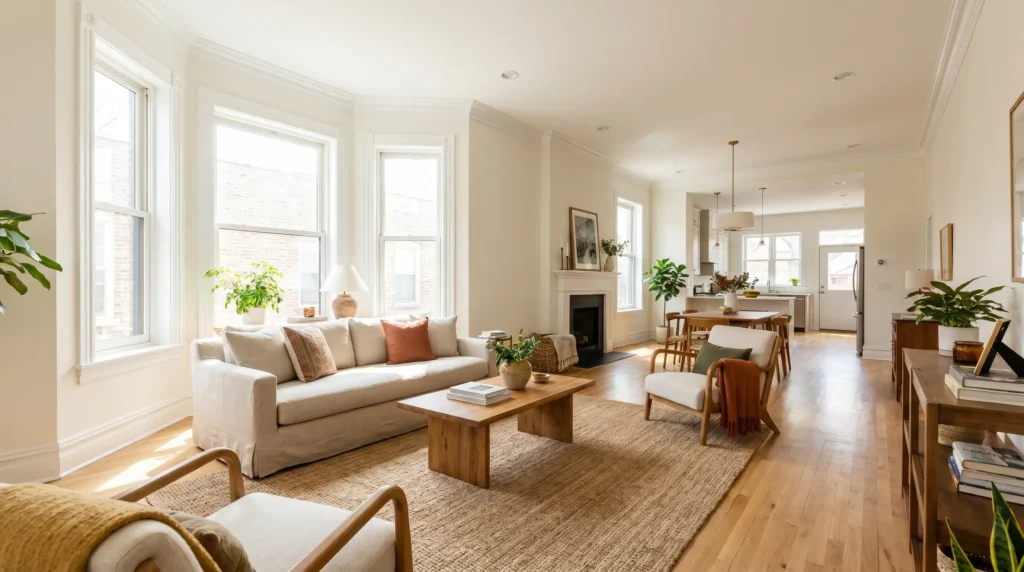
Ready to Transform Your Home’s Interior?
Transform & Restore Painting provides free, no-pressure estimates for homeowners across Chicagoland and Northwest Indiana. Our professional crew delivers flawless results — on time and on budget.
Why Interior Painting Matters in 2026
Interior painting is consistently ranked among the highest-ROI home improvement projects available to homeowners. According to industry research, a fresh coat of interior paint can return 107% of its cost at resale — meaning it’s one of the few upgrades that actually pays you back more than you spend.
But return on investment is only part of the story. Fresh paint also directly affects how your home feels every single day. Faded, chipped, or dated walls create a subconscious sense of neglect. In contrast, a clean, thoughtfully painted interior makes rooms feel larger, brighter, and more inviting — for both you and your guests. The Zillow Paint Colors Analysis found that the right interior color choices can add thousands to your home’s sale price.
Average ROI on Interior Painting
Years a Quality Paint Job Lasts
Most Requested Home Improvement Project
Typical Time to Paint a Single Room
The Hidden Benefits of Professional Interior Painting
Beyond aesthetics, there are several practical reasons why homeowners throughout Chicago and the suburbs schedule regular interior paint refreshes:
- Wall protection: Paint creates a barrier against moisture, dust, and minor abrasions that can deteriorate drywall over time.
- Improved indoor air quality: Modern low-VOC and zero-VOC paints reduce harmful chemical emissions, making your home healthier to live in.
- Mold and mildew resistance: Specially formulated paints for kitchens and bathrooms resist moisture and inhibit mold growth.
- Buyer appeal: Real estate agents consistently report that fresh, neutral interior paint is one of the easiest ways to attract buyers and justify asking price.
- Lighting enhancement: The right paint color can dramatically improve how natural and artificial light distributes throughout a room.
💡 Pro Tip: If you’re planning to sell your home within the next 12–18 months, prioritize repainting high-traffic areas first — entryways, living rooms, kitchens, and master bedrooms. These are the spaces buyers remember most.
Best Interior Paint Colors for Every Room
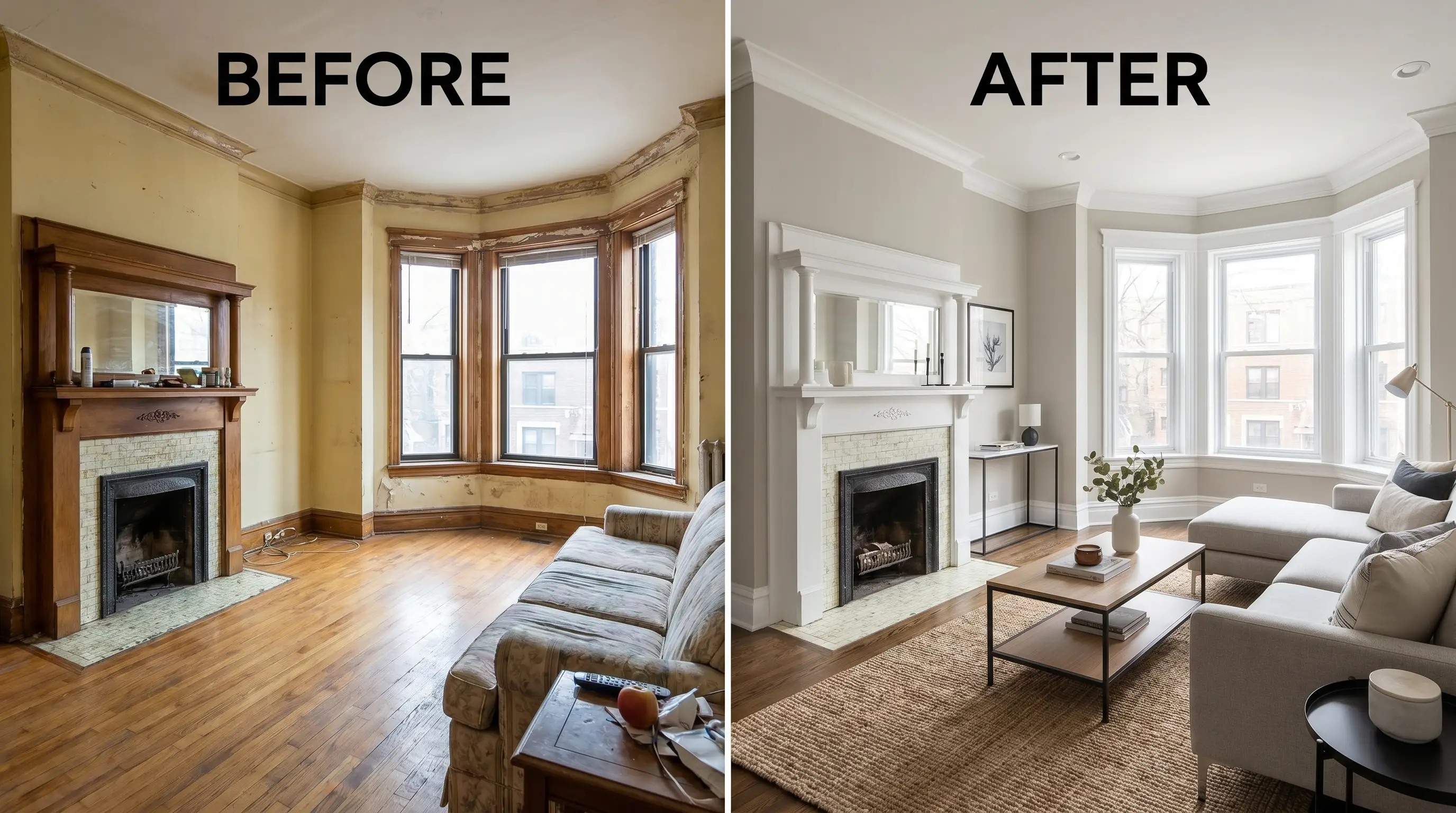
Choosing the right color is genuinely one of the most exciting — and most overwhelming — parts of any interior painting project. The good news is that certain colors consistently perform well in specific rooms, regardless of your personal style. Understanding a few foundational principles makes the process much easier.
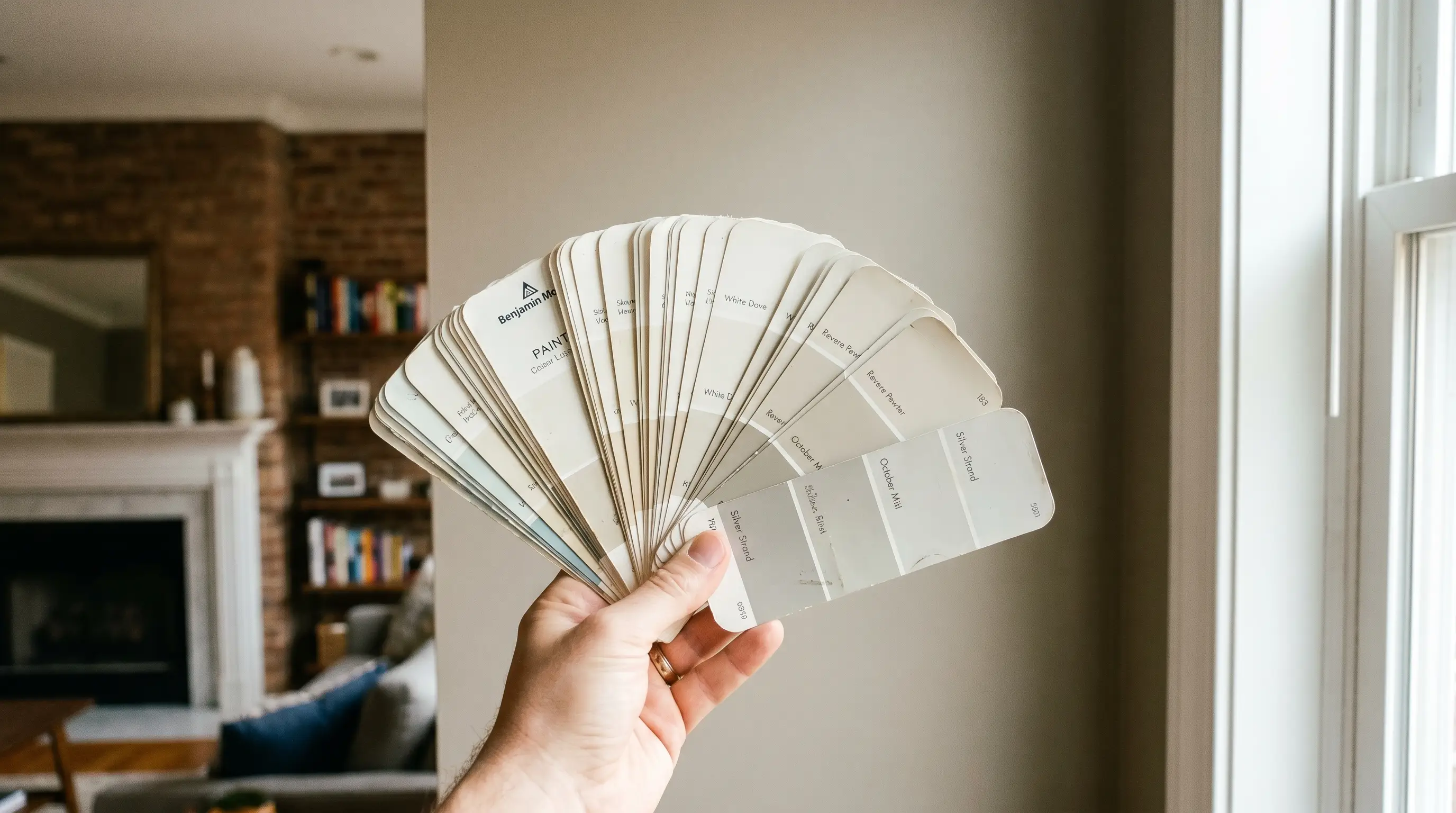
For a deeper look at how color affects mood and behavior in your home, our guide on color psychology in interior decorating is an excellent starting point. You can also explore color tools directly from Benjamin Moore and Sherwin-Williams to preview shades in your actual space before committing. Here’s a room-by-room breakdown of colors that our professional painters recommend most frequently to Chicago-area homeowners.
Living Room Paint Colors
Your living room sets the tone for your entire home. Because it’s used for both relaxing and entertaining, it benefits from colors that feel warm and welcoming without being overwhelming.
Top Recommended Living Room Colors:
- Warm White (e.g., Benjamin Moore White Dove, Sherwin-Williams Alabaster): Timeless, bright, and universally appealing. Works in virtually any style of home.
- Greige (Gray + Beige): The reigning neutral of the past decade, and still going strong. Pairs beautifully with wood tones and virtually any accent color.
- Sage Green: A 2026 trending color that brings warmth and a subtle connection to nature without feeling trendy or bold.
- Soft Terracotta: Ideal for rooms with warm wood furniture and leather accents. Creates a rich, cozy atmosphere.
- Classic Navy Accent Wall: Adds drama and sophistication without committing the entire room to a bold color.
Kitchen Paint Colors
Kitchens benefit from colors that feel clean, energizing, and appetizing. Because kitchens also deal with grease, steam, and frequent cleaning, your choice of finish matters just as much as color — more on that in the next section.
Top Recommended Kitchen Colors:
- Crisp White: Makes kitchens feel open, clean, and larger. Especially effective with dark cabinet hardware or stainless appliances.
- Soft Gray: A modern, sophisticated choice that complements white cabinets, subway tile, and quartz countertops beautifully.
- Warm Cream or Ivory: Slightly warmer than pure white, and easier on the eyes in high-light kitchens.
- Pale Blue or Aqua: Energizing and fresh, particularly popular in coastal-influenced and farmhouse-style kitchens.
Bedroom Paint Colors
Bedrooms are your personal sanctuary, so the priority here is creating a calm, restful atmosphere. Cool, muted tones consistently outperform bright or saturated colors in rooms designed for sleep and relaxation.
Top Recommended Bedroom Colors:
- Sage Green or Eucalyptus: Calming, organic, and incredibly versatile with white bedding and natural wood furniture.
- Dusty Blue or Slate: One of the most universally calming color families for bedrooms. Mimics the soothing quality of water and sky.
- Warm Gray or Greige: A classic choice that feels sophisticated and neutral without being cold.
- Blush Pink: When chosen in the right muted tone, blush pink creates a soft, romantic feel that works for both adult and children’s bedrooms.
- Charcoal Accent Wall: Bold and contemporary. Works best with bright white or warm cream on the remaining walls.
Bathroom Paint Colors
Bathrooms present unique challenges — high humidity, limited natural light, and small square footage all require thoughtful color selection. Lighter colors that open up the space and resist moisture damage work best.
Top Recommended Bathroom Colors:
- Bright White: Always fresh and clean-feeling. Use a satin or semi-gloss finish to resist moisture.
- Pale Gray-Blue: Creates a spa-like atmosphere and pairs beautifully with chrome fixtures and white tile.
- Warm Linen or Cream: Adds warmth to bathrooms that lack natural light.
- Soft Green: Nature-inspired and calming, especially effective in bathrooms with wood-toned accents.
💡 Pro Tip: Always test paint samples on your actual walls — not just on a small chip from the store. Paint colors change significantly depending on your room’s lighting, both natural and artificial. Apply a 12″×12″ sample patch and observe it at different times of day before making a final decision.
Paint Finishes Explained: Which One Do You Need?
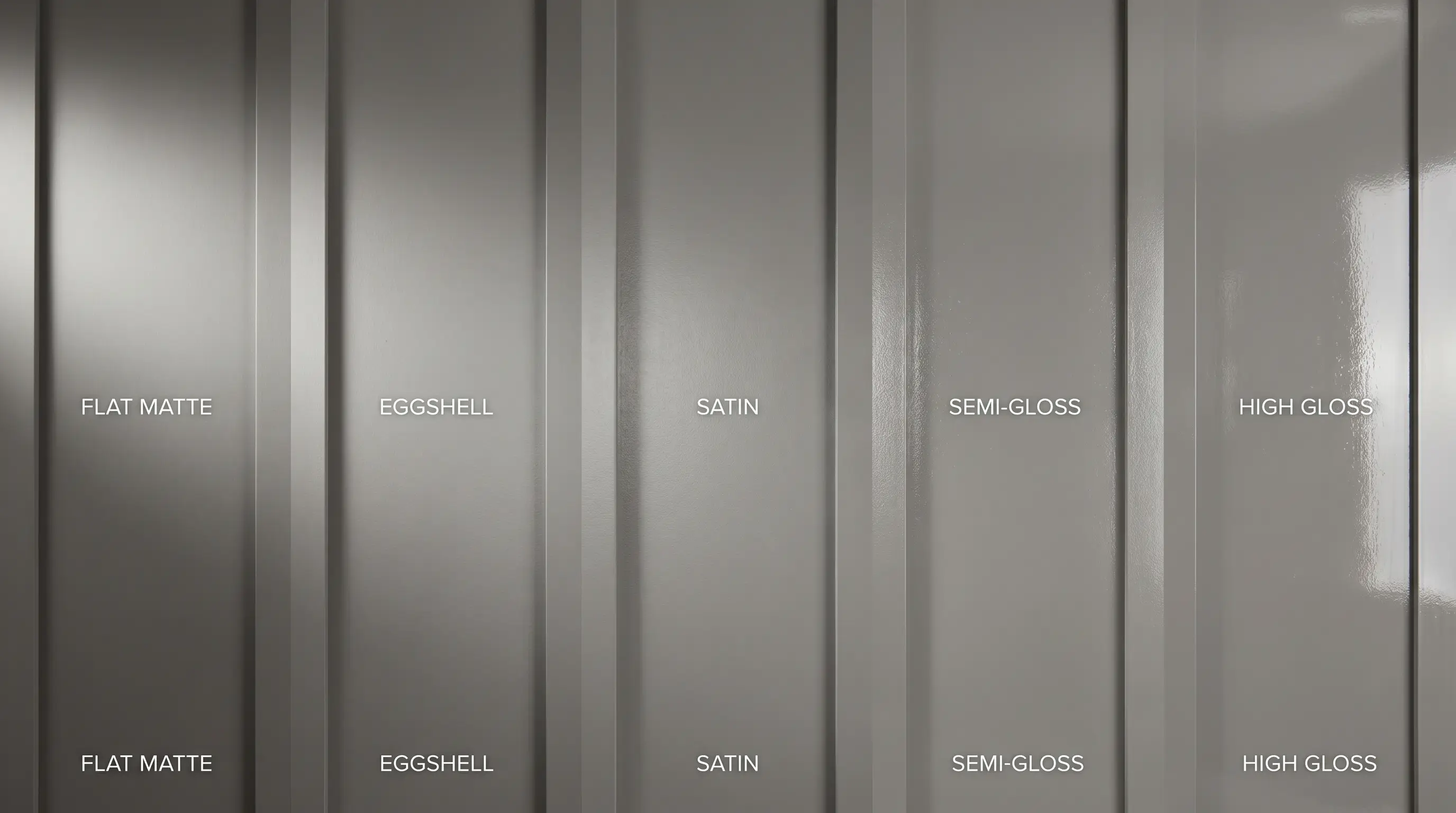
The finish you choose affects not just how a color looks, but how durable and cleanable your walls will be for years to come. Many homeowners don’t realize that choosing the wrong finish is one of the most common — and most avoidable — interior painting mistakes. For a comprehensive breakdown, check out our dedicated guide to choosing the right paint finish in every room. The Consumer Reports paint buying guide also offers useful independent comparisons of finish performance across leading brands.
| Finish Type | Sheen Level | Best Rooms | Cleanability | Hides Imperfections? |
|---|---|---|---|---|
| Flat / Matte | No sheen | Ceilings, low-traffic bedrooms, formal dining rooms | Low — wipes easily but not scrubable | Excellent |
| Eggshell | Very low sheen | Living rooms, bedrooms, hallways, dining rooms | Good — wipes clean | Very Good |
| Satin | Soft glow | Kitchens, bathrooms, children’s rooms, playrooms | Very Good — scrubable | Moderate |
| Semi-Gloss | Moderate shine | Trim, doors, window frames, cabinets, high-humidity areas | Excellent — highly washable | Low |
| High Gloss | Bright shine | Accent walls, cabinetry, furniture, doors | Outstanding | Very Low — highlights every flaw |
The Most Important Finish Decision: Walls vs. Trim
One of the most impactful decisions in any interior painting project is choosing different finishes for your walls versus your trim. Most professional painters recommend eggshell or satin for walls, combined with semi-gloss for all trim, baseboards, door frames, and window casings.
This contrast — a softer finish on walls and a brighter finish on trim — creates a polished, architectural look that immediately elevates the sophistication of any room. It’s a detail that distinguishes professional results from DIY projects.
Interior Painting Cost in Chicago: What to Expect
One of the first questions homeowners ask is: how much does interior painting cost in Chicago? The honest answer is that costs vary based on several factors — but understanding those factors helps you set realistic expectations and recognize a fair quote when you see one.
Generally, professional interior painting in the Chicago area costs $2 to $6 per square foot for walls, including labor and materials. According to Angi’s interior painting cost data, national averages align closely with what Chicago-area homeowners typically pay. Here’s a more detailed room-by-room breakdown:
| Room / Area | Average Size | Estimated Cost Range | Factors That Affect Price |
|---|---|---|---|
| Small Bedroom | 100–130 sq ft | $300 – $700 | Closets, ceiling height, surface condition |
| Master Bedroom | 200–300 sq ft | $600 – $1,200 | Tray ceilings, accent walls, trim detail |
| Living Room | 250–400 sq ft | $600 – $1,500 | Vaulted ceilings, fireplace surrounds |
| Kitchen | 150–250 sq ft | $400 – $1,200 | Cabinets, backsplash area, ceiling type |
| Bathroom | 40–80 sq ft | $250 – $700 | Moisture prep, ventilation, tile edge work |
| Hallway / Entryway | Varies | $300 – $900 | Height, stairwell, detailed trim |
| Dining Room | 150–250 sq ft | $400 – $1,100 | Wainscoting, crown molding, chair rail |
| Whole Home (2,000 sq ft) | Full interior | $4,000 – $10,000+ | Ceilings, trim, number of colors, prep extent |
What Drives Interior Painting Costs Up or Down?
Several factors influence where your project lands within these ranges. Understanding them helps you have a more productive conversation with any contractor you’re considering.
Factors That Increase Cost:
- High or vaulted ceilings — require ladders, scaffolding, and additional time
- Poor surface condition — extensive patching, skim coating, or stain blocking adds labor
- Dark-to-light color changes — require primer coats and additional finish coats
- Detailed architectural trim — crown molding, coffered ceilings, and wainscoting are labor-intensive
- Premium paint brands — Benjamin Moore and Sherwin-Williams professional lines cost more but last longer
- Cabinet painting — a separate specialty service that requires significant prep and finish work
Factors That Can Reduce Cost:
- Scheduling during off-peak seasons (winter months are typically slower)
- Bundling multiple rooms or whole-home projects (contractors often discount larger jobs)
- Walls in good condition that require minimal prep
- Sticking to a single color or color family throughout the home
⚠️ Important: Be cautious of extremely low bids. Interior painting quotes that seem significantly cheaper than the market rate often signal shortcuts — thin single coats, skipped primer, inadequate surface prep, or low-quality paint. These all result in poor durability and a job that looks faded or uneven within a year or two. Our guide on avoiding common painting mistakes covers this in detail.
Get an Accurate, No-Obligation Quote
Pricing varies significantly based on your specific home and project scope. The best way to get an accurate number is a professional on-site assessment. Transform & Restore Painting provides free, detailed estimates with no pressure and no surprises.
DIY vs. Professional Interior Painting: An Honest Comparison
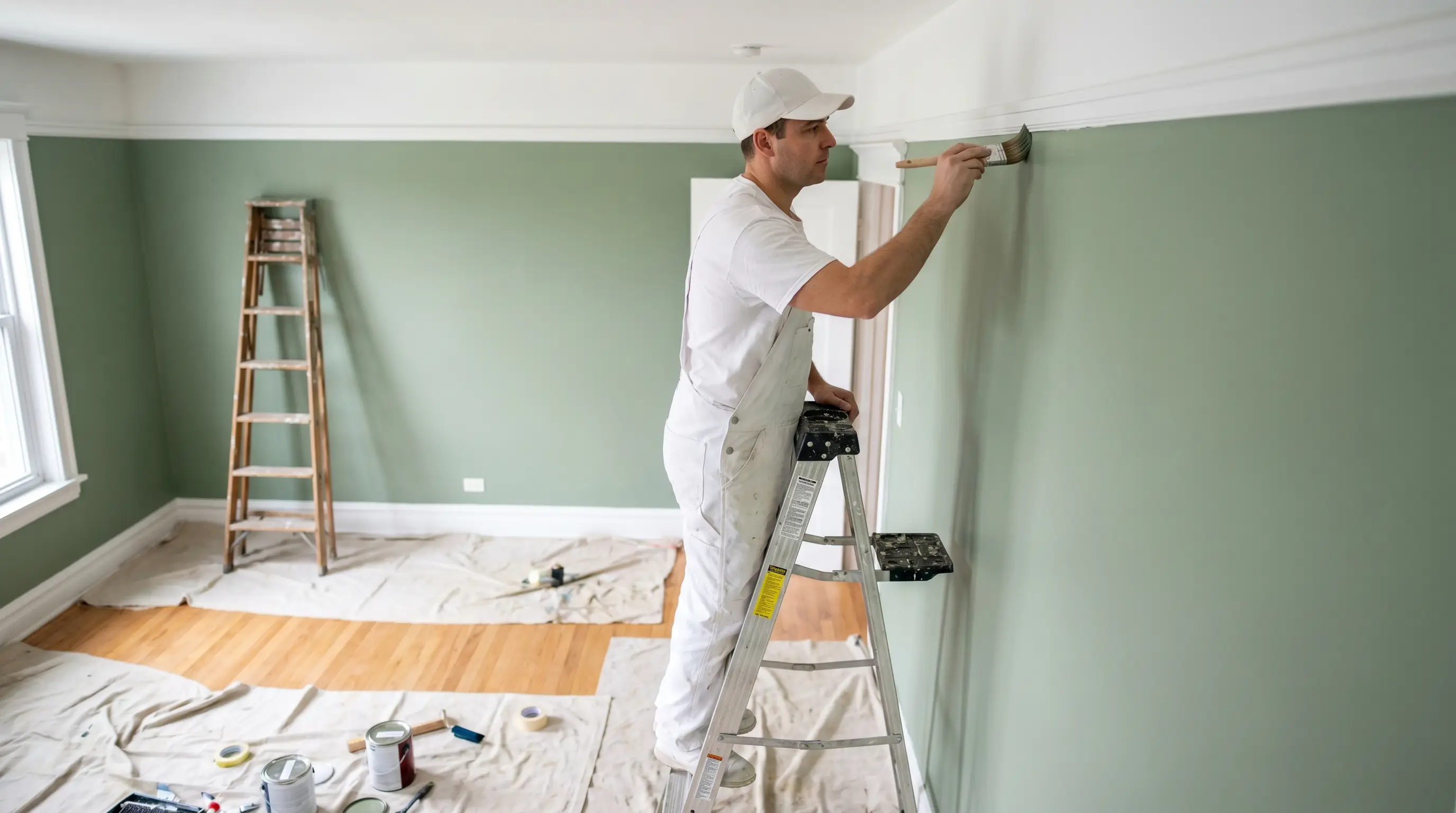
This is one of the most common questions homeowners wrestle with, and the honest answer isn’t “always hire a pro.” It depends on the scope of your project, your skill level, your timeline, and the result you expect. Here’s an objective breakdown to help you decide.
| Consideration | DIY Painting | Professional Painting |
|---|---|---|
| Upfront Cost | Lower (materials only) | Higher (labor + materials) |
| Time Required | High — weekends, multiple sessions | Low — completed efficiently by crew |
| Result Quality | Variable — depends on skill | Consistently high — clean lines, full coverage |
| Surface Preparation | Often inadequate | Thorough — sanding, patching, priming |
| Durability | Shorter — without proper prep | Longer — with professional application |
| Stress Level | High — especially for multi-room projects | Low — handled completely for you |
| Warranty | None | Typically 1–3 years on workmanship |
| Best For | Simple accent walls, small rooms, touch-ups | Full rooms, entire homes, high ceilings, detailed trim |
When DIY Makes Sense
Honestly, there are situations where doing it yourself is perfectly reasonable. If you’re painting a small, simple room — a powder bath, a child’s bedroom, or a single accent wall — and you’re comfortable with the work, DIY can be a practical choice. The key is not cutting corners on prep or paint quality.
When You Should Definitely Hire a Professional
On the other hand, certain situations almost always benefit from professional expertise. If your project involves any of the following, professional painting is strongly recommended:
- Ceilings higher than nine feet
- Stairwells or two-story entryways
- Extensive drywall repairs or skim coating
- Detailed crown molding, coffered ceilings, or wainscoting
- Cabinet painting or refinishing
- Whole-home repaints
- Pre-sale projects where first impressions are critical
What to Expect From a Professional Interior Painting Project
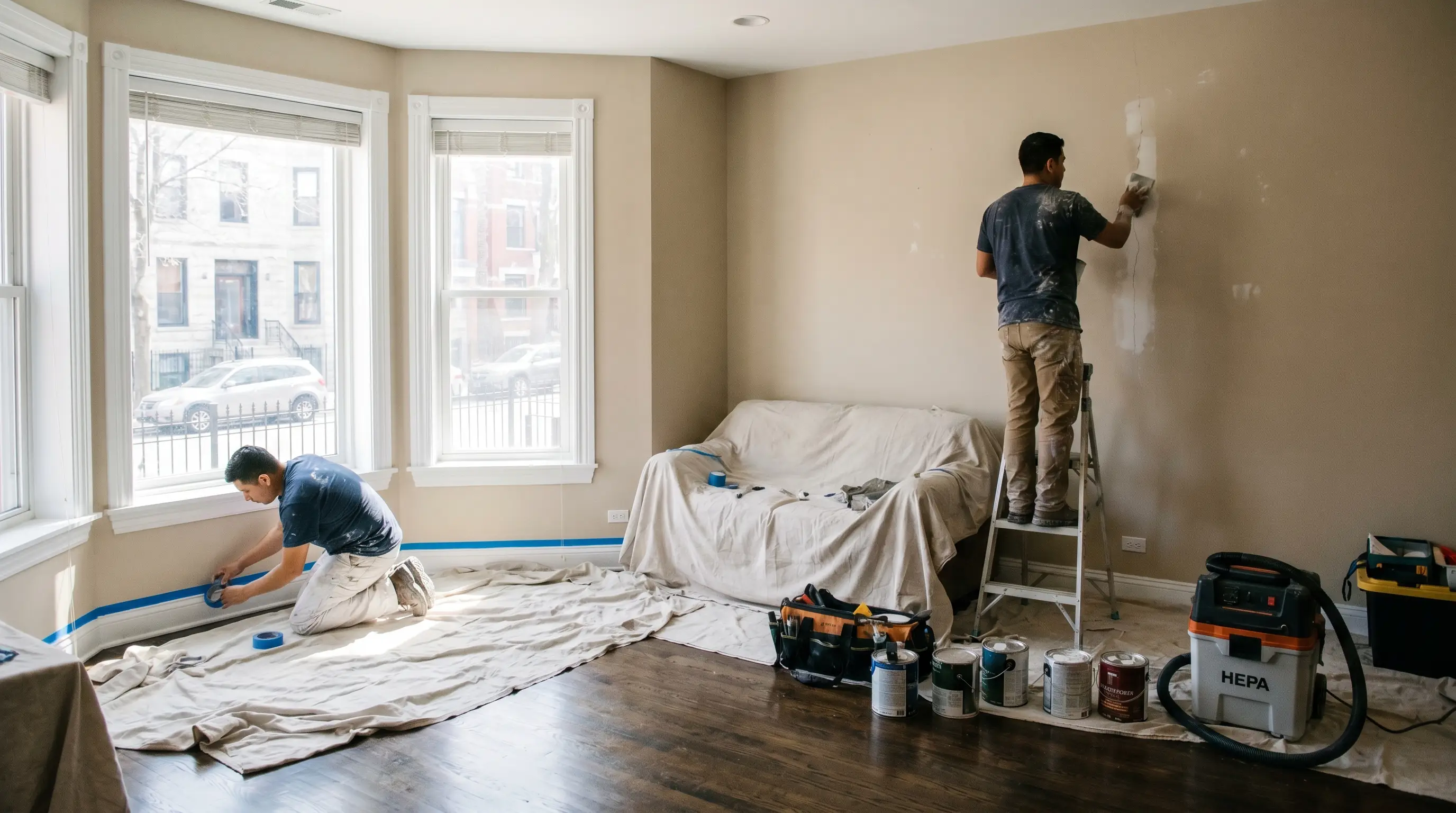
Many homeowners aren’t sure what the process actually looks like when they hire a professional interior painting contractor. Understanding the full scope of a professional project helps you evaluate quotes more accurately and know what quality work actually looks like.
Step 1: In-Home Estimate and Color Consultation
A reputable contractor begins with a thorough walkthrough of your home. They assess surface conditions, identify areas requiring repair, discuss your color goals, and provide a detailed written quote. This is also the opportunity to ask about materials, timeline, and warranty.
Step 2: Surface Preparation
This is arguably the most important step in any interior painting project — and the one most frequently shortcut by inexperienced painters. Proper prep includes:
- Filling nail holes, cracks, and surface imperfections with spackle or joint compound
- Sanding patched areas and rough surfaces smooth
- Cleaning walls to remove dust, grease, and contaminants
- Applying primer to bare drywall, repaired areas, stained surfaces, or drastic color changes
- Taping trim, baseboards, and edges for clean, crisp lines
- Protecting floors, furniture, and fixtures with drop cloths
Step 3: Paint Application
Professional painters use a combination of cutting in (brushwork along edges) and rolling for consistent coverage. Most projects require two full coats of finish paint, with adequate dry time between coats. Rushing this step — one of the most common DIY mistakes — results in uneven color and poor adhesion.
Step 4: Trim, Doors, and Detail Work
All trim, baseboards, door frames, and window casings are painted separately, typically with a semi-gloss finish for durability and a polished look. Clean, sharp edges between walls and trim are a hallmark of professional-quality work.
Step 5: Final Walkthrough and Touch-Ups
Before any professional crew leaves, they conduct a thorough final inspection with the homeowner. Any touch-ups, missed spots, or concerns are addressed on the spot, ensuring you’re completely satisfied before the project closes out.
📚 Related Reading: Learn what separates a good paint job from a great one in our detailed guide: Expert Advice on Avoiding Common Painting Mistakes. This article covers the exact prep steps and techniques professional painters use — and the shortcuts that lead to failures.
Common Interior Painting Mistakes (And How to Avoid Them)
Whether you’re planning a DIY project or evaluating a contractor, knowing the most common interior painting mistakes protects you from poor results and wasted money. These are the errors we see most frequently — and the ones that are easiest to prevent.
⚠️ The 7 Most Costly Interior Painting Mistakes
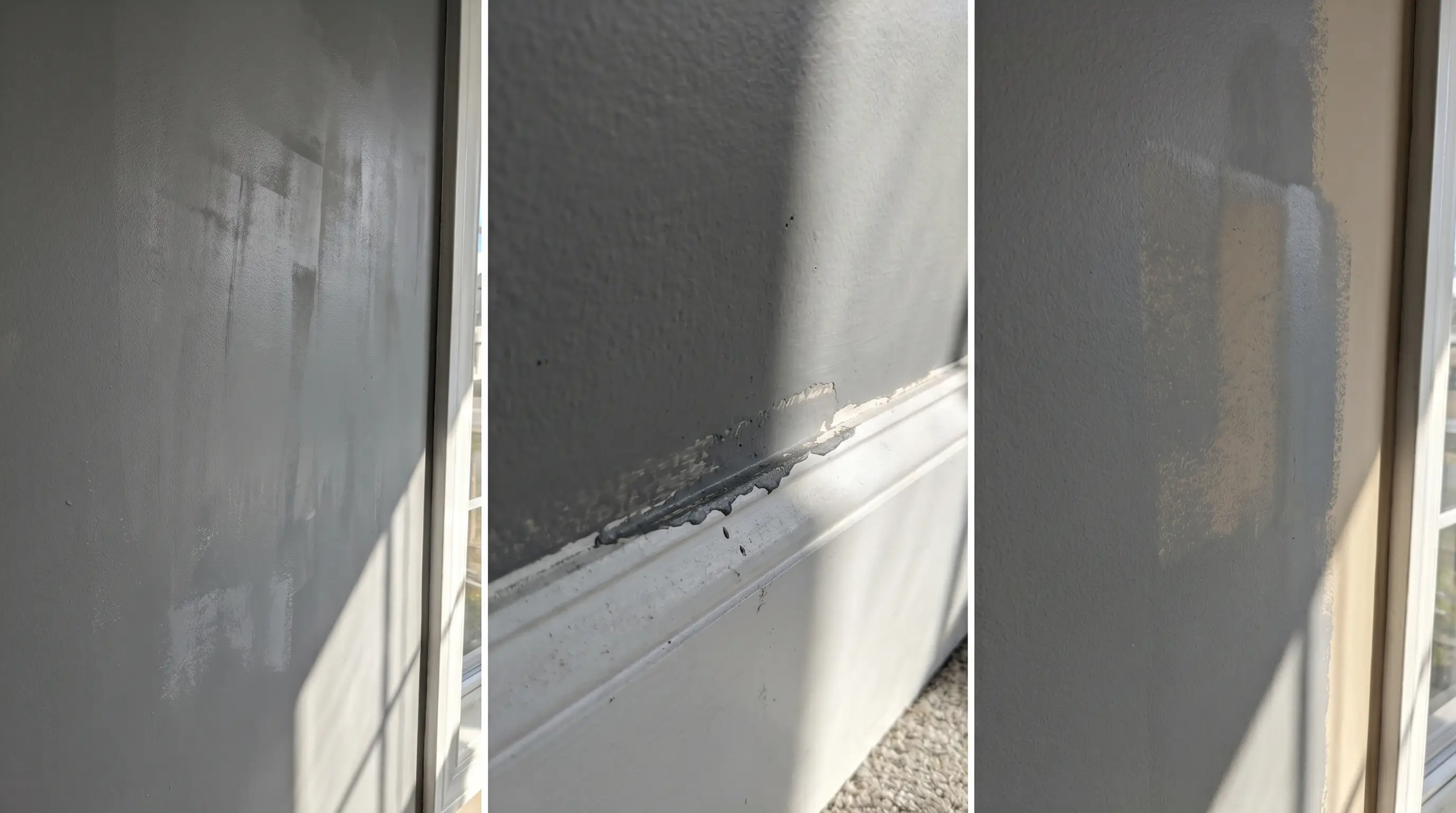
- Skipping surface preparation: The number one cause of paint failure. Cracks, holes, and rough surfaces must be addressed before a brush touches the wall.
- Ignoring primer: Primer is not optional when painting over dark colors, bare drywall, or stained surfaces. Skipping it leads to poor adhesion and uneven color.
- Choosing the wrong finish: Using flat paint in a kitchen or bathroom leads to rapid deterioration. Match the finish to the room’s demands.
- Applying only one coat: Single-coat coverage almost always looks thin and uneven. Two full coats are standard for professional results.
- Rushing between coats: Each coat must dry fully before the next is applied. Impatience leads to peeling, streaking, and uneven texture.
- Poor edge work and taping: Sloppy edges between walls, trim, and ceilings are the most obvious sign of an amateur paint job.
- Using cheap paint: Budget-brand paints require more coats, cover less evenly, and fade faster. Premium paints like Benjamin Moore Regal Select or Sherwin-Williams Emerald are worth the investment.
For a more complete look at how to avoid these pitfalls — whether you’re going DIY or hiring help — see our guide on avoiding the most common painting mistakes. And if you’re also considering refreshing your home’s exterior, our complete house painting guide for 2026 is an excellent companion resource.
Professional Interior Painting Services Across Chicagoland and Northwest Indiana
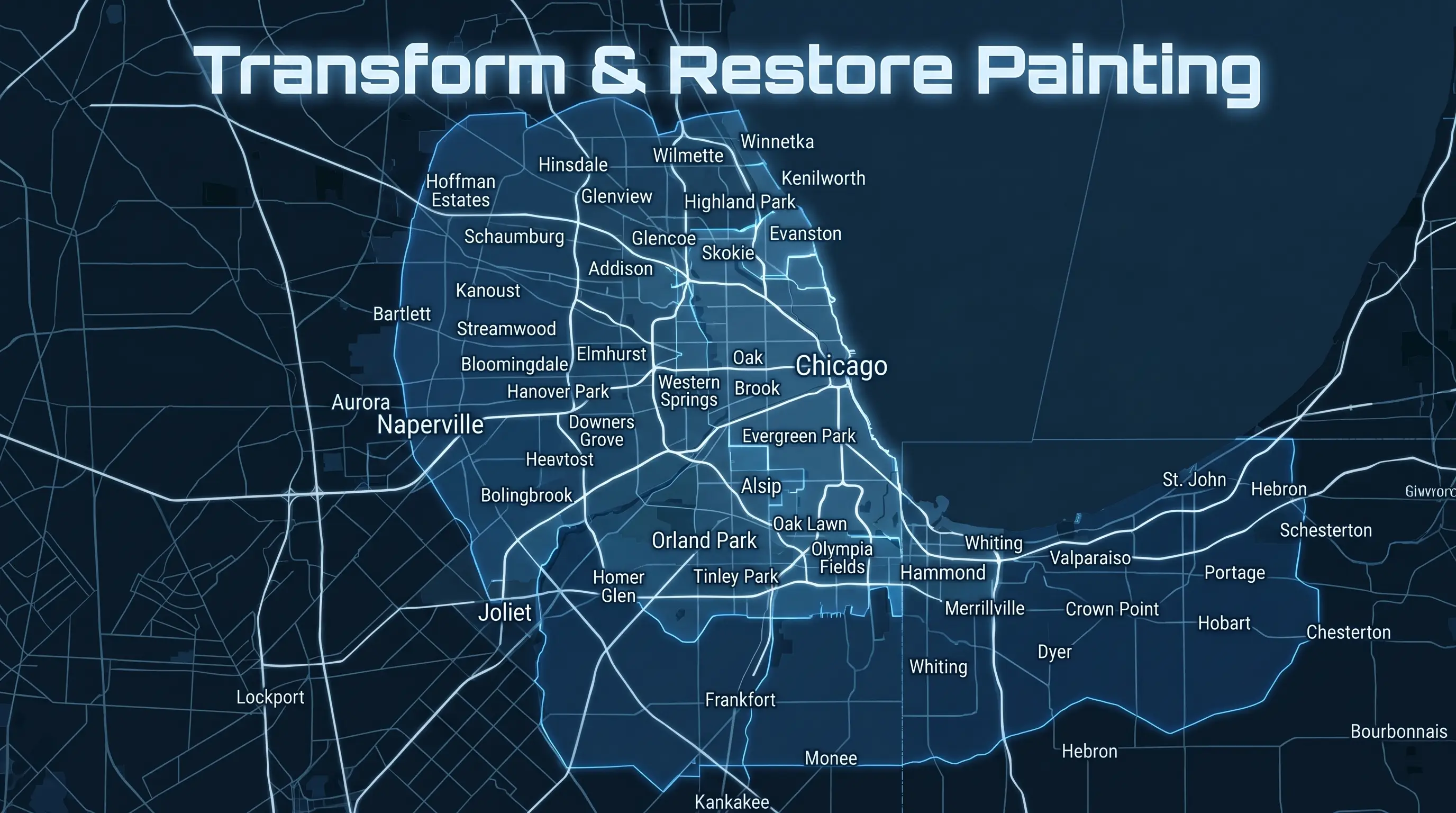
Transform & Restore Painting proudly serves homeowners throughout the greater Chicago metropolitan area — from the North Shore to the South Suburbs, from the western communities along I-88 to the communities of Northwest Indiana. Below, we’ve highlighted some of the key service areas where we regularly complete interior painting projects, along with some location-specific information that’s genuinely useful to local homeowners.
Interior Painting in Chicago
From Lincoln Park and Wicker Park to Beverly and Hyde Park, Chicago homeowners trust Transform & Restore Painting for residential interior painting that handles the unique challenges of city living — narrow access, older plaster walls, and diverse architectural styles from vintage greystone to modern condo. We understand Chicago homes inside and out.
Interior Painting in Naperville
Naperville’s newer construction communities often feature open floor plans with soaring ceilings, making color selection and finish choice particularly important. We regularly help Naperville homeowners select colors that complement their home’s architecture and flow cohesively through connected living spaces.
Interior Painting in Hinsdale
Hinsdale’s distinguished homes range from historic Tudor and Colonial Revival properties to modern custom builds. Interior painting here demands precision on detailed millwork, coffered ceilings, paneled libraries, and formal entertaining spaces. Our crews have the experience and patience these homes require.
Interior Painting in Schaumburg
Schaumburg homeowners frequently come to us for whole-home repaints and pre-sale refreshes. The northwest suburban market is competitive, and updated interior paint consistently helps Schaumburg homes sell faster and command better prices. We offer efficient scheduling to accommodate tight timelines.
Interior Painting in Glenview
Glenview’s mix of established ranch homes, split-levels, and newer construction means a wide variety of interior painting needs. We work across all home styles in Glenview — from straightforward whole-home repaints in mature neighborhoods to complex custom finishes in newer builds.
Interior Painting in Highland Park
Highland Park’s North Shore character is reflected in its homes — many feature original architectural details, high ceilings, and expansive rooms that deserve exceptional attention. We bring the same level of craft to Highland Park interiors that these distinctive homes demand.
Interior Painting in Oak Brook
Oak Brook homeowners and business owners alike rely on us for impeccable interior painting results. Whether it’s a spacious executive home near York Road or a condominium near Oakbrook Center, we deliver precise, professional results with minimal disruption to daily life.
Interior Painting in Downers Grove
Downers Grove is one of the western suburbs’ most beloved communities, with a diverse mix of vintage Craftsman homes and newer subdivisions. Our interior painting crews are familiar with the unique characteristics of both older plaster walls and modern drywall construction throughout Downers Grove neighborhoods.
Interior Painting in Evanston, Wilmette & the North Shore
The North Shore communities of Evanston, Wilmette, Glencoe, Kenilworth, and Winnetka feature some of the Chicago area’s most architecturally significant homes. These properties often include historically accurate woodwork, plaster ceilings, and unique surface conditions that require careful, experienced handling. We approach every North Shore project with the care and respect these homes deserve.
Interior Painting in the South Suburbs
Homeowners in Orland Park, Tinley Park, Frankfort, Homer Glen, Oak Lawn, Evergreen Park, Alsip, and Olympia Fields have trusted Transform & Restore Painting for years. Our south suburban customers frequently combine interior painting with exterior services for complete whole-home transformations. If you’re curious about updating your home’s exterior at the same time, we can help with that too.
Interior Painting in Aurora, Joliet & the Southwest Suburbs
Aurora and Joliet homeowners benefit from our competitive pricing on larger-scale projects. Many homes in these communities are spacious, making whole-home repaints both practical and highly impactful. We serve Joliet, Aurora, Lockport, Bolingbrook, Romeoville, and surrounding communities throughout Will and Kane counties.
Interior Painting in Northwest Indiana
Transform & Restore Painting extends its professional interior painting services into Northwest Indiana, serving Merrillville, Hammond, Valparaiso, Crown Point, Schererville, Portage, Hobart, Chesterton, Dyer, Whiting, St. John, and Hebron. Northwest Indiana homeowners enjoy the same quality, professionalism, and attention to detail as our Illinois customers — with local knowledge of the region’s unique housing stock and climate conditions.
Not sure if we serve your neighborhood? Contact us directly and we’ll confirm coverage for your area. We also serve many additional communities not listed here throughout Cook, DuPage, Will, Kane, Kankakee, and Lake counties in Illinois, as well as Lake County in Indiana.
Have Questions? Our Team Is Ready to Help.
Every home is different, and every project deserves a personalized approach. Book a free, no-obligation estimate with Transform & Restore Painting and get expert answers to all your questions — along with a transparent, detailed quote for your specific project.
Frequently Asked Questions: Interior Painting in Chicago
These are the questions we hear most often from homeowners across Chicagoland. We’ve answered them as honestly and completely as possible, because we believe informed homeowners make better decisions — and better partnerships.
How much does interior painting cost in Chicago?
Interior painting in Chicago typically costs between $2 and $6 per square foot for professional labor and materials. A standard bedroom runs $300–$800, a living room $600–$1,500, a kitchen $400–$1,200, and a bathroom $250–$700. Whole-home projects for a 2,000–2,500 sq ft home range from $4,000 to $10,000+, depending on ceiling height, surface condition, number of colors, and the extent of trim work included. The best way to get an accurate number is a free on-site estimate.
How long does interior paint last?
High-quality interior paint applied by a professional typically lasts 5–10 years in most rooms. High-traffic areas like hallways, kitchens, and bathrooms may need refreshing every 3–5 years. Bedrooms and formal living spaces can often go 7–10 years between full repaints. Paint longevity depends heavily on surface prep quality, paint brand, finish type, and how well the space is maintained.
What is the best paint finish for interior walls?
Eggshell is the most versatile finish for interior walls — it provides a soft, low-sheen appearance that’s easy to clean and works beautifully in living rooms, dining rooms, and bedrooms. Satin is better suited for kitchens, bathrooms, and children’s rooms because it’s more washable. Flat or matte finish works best for ceilings and formal rooms with little traffic. Semi-gloss is the standard for all trim, doors, and window casings.
Does interior painting increase home value?
Yes — and significantly. Professional interior painting consistently delivers one of the highest ROI of any home improvement project, often returning more than 100% of its cost at resale. Fresh, neutral-toned paint improves buyer perception, makes spaces feel larger and cleaner, and can add thousands to your home’s perceived value. It’s one of the most cost-effective things a seller can do before listing.
How long does it take to paint the interior of a house?
A single room typically takes one full professional workday. A standard 2,000–2,500 sq ft home with a 2–3 person professional crew usually takes 3–5 days. Larger homes, high ceilings, extensive prep work, detailed trim painting, or cabinet painting can extend the timeline to 7–10 days. Your contractor should provide a clear timeline estimate before work begins.
Should I hire a professional painter or do it myself?
For small, simple projects — a powder bath, a single accent wall — DIY can be a reasonable approach if you’re comfortable with the work. However, professional interior painting consistently delivers better results on larger projects, complex spaces, high ceilings, and detailed trim work. Professionals also complete the job significantly faster, use higher-quality materials, and provide warranties on their workmanship. For most homeowners, the convenience and quality difference justifies the investment.
What is the best interior paint brand?
Benjamin Moore, Sherwin-Williams, and Behr Premium are consistently rated among the top interior paint brands. Professional painters most frequently recommend Benjamin Moore Regal Select or Aura, and Sherwin-Williams Emerald or Cashmere, for their superior coverage, durability, and color retention. These premium paints cost more per gallon but typically require fewer coats and last significantly longer than budget alternatives.
How do I choose the right interior paint colors?
Start by considering the room’s natural light, size, and intended function. Warm neutrals like greige and soft beige work well in living areas. Cool tones like sage green and dusty blue create calm in bedrooms. Crisp whites energize kitchens. Always test actual paint samples on your walls — not just chips from the store — and observe them at different times of day before committing. Our guide on color psychology in interior decorating offers a deeper framework for making confident color decisions.
How should I prepare my home for interior painters?
Before your painting crew arrives, remove or relocate fragile items and valuables, take down wall art and mirrors, and ensure the rooms are accessible. Most professional painters handle the heavy prep work — patching holes, sanding, taping trim, and moving light furniture away from walls. It’s helpful to communicate any specific concerns (furniture you want left in place, rooms with pets, etc.) when booking your estimate so the crew can plan accordingly.
Do professional interior painters move furniture?
Yes — most professional interior painting crews will move light to medium furniture away from walls and protect it with drop cloths during the project. Very heavy furniture, fragile antiques, or specialty items should be moved or secured by the homeowner before the crew arrives. Always confirm specific furniture-moving policies with your contractor when scheduling your estimate, as policies vary by company.
How many coats of paint does an interior wall need?
Most interior walls require two full coats of finish paint for complete, even coverage. Drastic color changes — particularly going from a dark color to a significantly lighter one — may require a primer coat plus two finish coats. Single-coat applications almost always look uneven and thin. Skipping the second coat to save time or money is one of the most common causes of disappointing results in both DIY and low-quality professional jobs.
Is it worth painting interior trim and ceilings?
Absolutely. Fresh trim and ceiling paint dramatically elevate the finished look of any room and are often what buyers notice first — particularly yellowed or dingy baseboards and crown molding. Painting trim bright white alongside freshly painted walls creates a polished, high-end appearance that adds significant perceived value. Most whole-room and whole-home quotes include trim and ceiling work as part of the complete package.
What colors make a small room look bigger?
Light, cool colors consistently make rooms feel larger by reflecting more light. Soft whites, pale grays, and light blues are the most effective choices for expanding the perceived size of a space. Additionally, painting the ceiling the same color as the walls — or slightly lighter — can visually raise the ceiling and make rooms feel taller and more open. Avoid dark colors and busy patterns in rooms where you want to maximize the sense of space.
Do you need to prime before painting interior walls?
In most cases, yes — primer is an essential step that should not be skipped. Primer is especially critical when painting over dark or bold colors, bare or freshly repaired drywall, stained walls, or surfaces with moisture damage. Primer improves paint adhesion, creates a uniform base color, and ensures your finish coats go on evenly and look professional. Some premium paints include built-in primer, but a separate primer coat is still recommended for challenging surface conditions.
Does Transform & Restore Painting serve areas outside Chicago?
Yes — extensively. Transform & Restore Painting serves the complete Chicagoland area, including the North Shore (Wilmette, Winnetka, Kenilworth, Glencoe, Highland Park), the North and Northwest suburbs (Glenview, Schaumburg, Hoffman Estates, Streamwood, Bartlett, Bloomingdale, Hanover Park, Addison), the western suburbs (Naperville, Hinsdale, Oak Brook, Downers Grove, Elmhurst, Western Springs, Aurora), and the south and southwest suburbs (Orland Park, Tinley Park, Frankfort, Homer Glen, Oak Lawn, Evergreen Park, Joliet, Lockport, Bolingbrook). We also serve Northwest Indiana, including Merrillville, Hammond, Valparaiso, Crown Point, Schererville, Portage, Hobart, Chesterton, Dyer, Whiting, St. John, and Hebron.
Ready to Transform Your Home’s Interior? Here’s How to Get Started.
A professionally painted interior is one of the most impactful, cost-effective upgrades you can make to your home. Whether you’re freshening up a single room, preparing your home for sale, or finally doing that whole-home refresh you’ve been planning for years, the right painting contractor makes all the difference in the world.
At Transform & Restore Painting, we bring over two decades of experience to every project — from historic Chicago greystones to modern Naperville construction, from North Shore estates to Northwest Indiana ranch homes. Our crews are detail-oriented, respectful of your property, and committed to delivering results that look great and last for years.
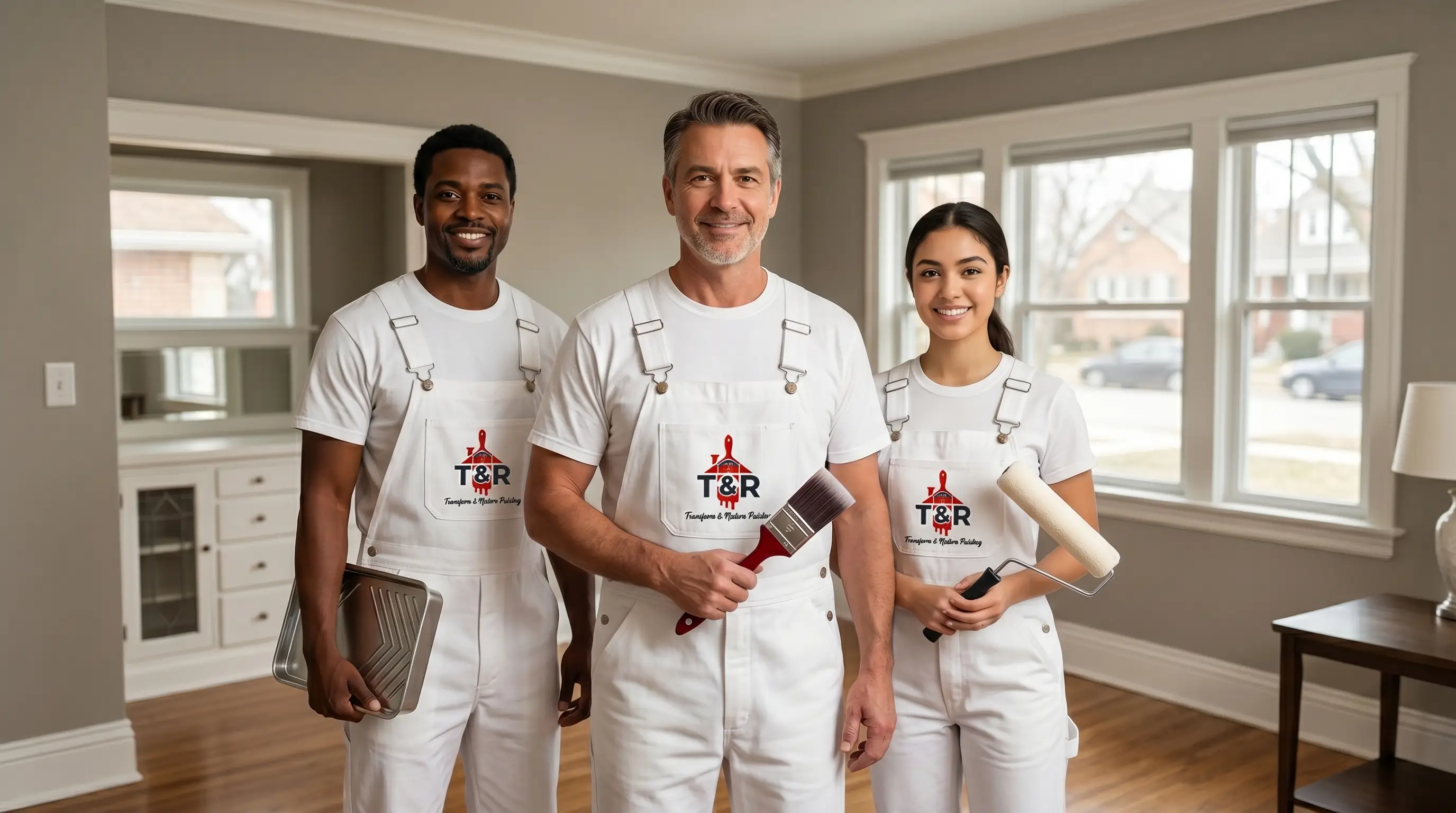
What You Get When You Work With Transform & Restore Painting:
- ✅ Free, detailed, no-pressure in-home estimates
- ✅ Thorough surface preparation — no shortcuts
- ✅ Premium paint brands (Benjamin Moore, Sherwin-Williams)
- ✅ Experienced, professional crews who respect your home
- ✅ Clean, precise edges and consistent coverage
- ✅ On-time project completion
- ✅ Final walkthrough with the homeowner before we leave
- ✅ Workmanship warranty on every project
- ✅ Service across Chicagoland and Northwest Indiana
Furthermore, every project we complete comes with our commitment to transparency — clear communication about timeline, costs, and materials from the very first conversation. We don’t believe in surprises, and we don’t believe in cutting corners. Most importantly, we don’t consider a job finished until you’re genuinely satisfied with the result.
Book Your Free Interior Painting Estimate Today
Serving Chicago, Naperville, Hinsdale, Schaumburg, Glenview, Highland Park, Oak Brook, Downers Grove, Evanston, Orland Park, Joliet, Aurora, and communities across Chicagoland and Northwest Indiana.