
Painted cabinets are the cheapest way to make a dated kitchen look new. They are also the easiest project to get badly wrong, because almost all of the work happens before any color goes on, and almost none of it is visible in the finished photo.
This guide covers how much it costs to paint kitchen cabinets in Chicago in 2026, why published prices differ so wildly, and what separates a finish that lasts a decade from one that chips at the handles by spring.
What this guide covers
- Quick Answer: Cabinet Painting Cost in Chicago
- How Much Does It Cost to Paint Kitchen Cabinets?
- Cabinet Painting Cost by Kitchen Size
- Why Published Cabinet Prices Vary So Much
- Is It Cheaper to Paint or Replace Cabinets?
- What Drives the Price of a Cabinet Job
- Do You Need to Sand Cabinets Before Painting?
- Spray or Brush: Which Finish Is Better?
- How Long Does Cabinet Painting Take?
- Can You Paint Laminate or Thermofoil Cabinets?
- What a Real Cabinet Quote Should Include
- Mistakes That Ruin a Cabinet Paint Job
- Get a Cabinet Painting Quote
- Frequently Asked Questions
Quick Answer: Cabinet Painting Cost in Chicago
The short version
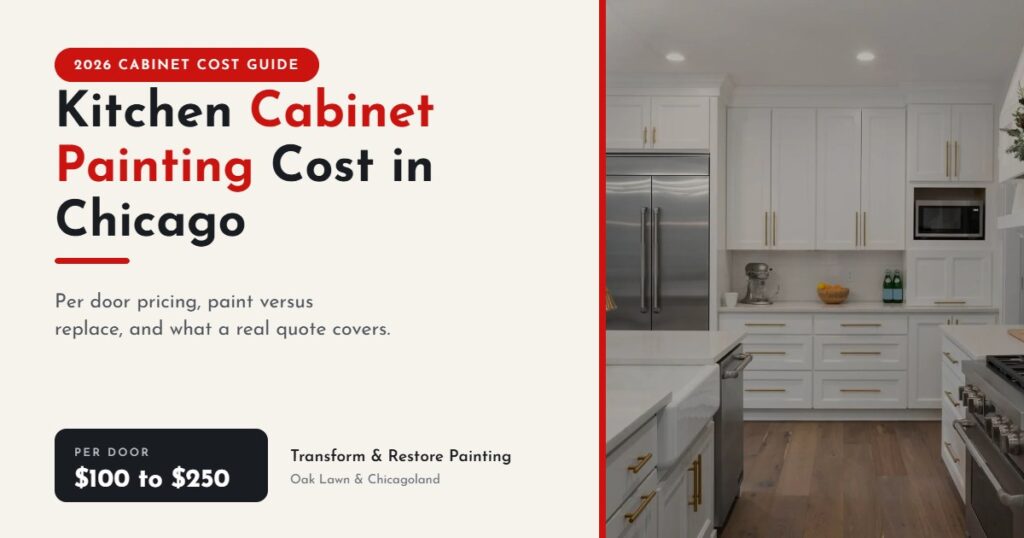
Professional kitchen cabinet painting in Chicago costs $2,500 to $9,000 for most kitchens in 2026, or roughly $100 to $250 per door and drawer front. A small galley kitchen sits at the low end. A large kitchen with an island and a pantry wall sits at the top.
Door and drawer count, not square footage, is how cabinet jobs are priced. Painting typically costs 20% to 30% of what replacing the same cabinets would.
How Much Does It Cost to Paint Kitchen Cabinets?
Chicago painters usually price cabinet work per door and drawer front, commonly $100 to $250 each for a professionally prepped and sprayed finish. Some quote by the linear foot instead, generally $30 to $70 per foot of cabinet run.
Counting your own doors and drawers takes two minutes and makes every quote you receive easier to read. Count each cabinet door separately, including the pair on a double cabinet, then add every drawer front.
| Pricing Method | Typical Chicago Range | Notes |
|---|---|---|
| Per door | $100 to $250 | The most common and most honest way to size the job |
| Per drawer front | $50 to $125 | Smaller surface, but the same prep steps |
| Per linear foot | $30 to $70 | Faster to quote, less accurate on detailed doors |
| Whole kitchen (typical) | $2,500 to $9,000 | Depends almost entirely on piece count |
Cabinet Painting Cost by Kitchen Size
Door and drawer count tracks closely with kitchen size, so here is what Chicago homeowners typically pay in 2026.
| Kitchen Size | Doors & Drawers | Typical Chicago Cost |
|---|---|---|
| Small galley or compact L-shape | 15 to 20 pieces | $2,500 to $5,000 |
| Standard suburban kitchen | 25 to 35 pieces | $4,000 to $8,000 |
| Large kitchen with island | 40 to 50 pieces | $7,000 to $12,000 |
| Large kitchen plus pantry and butler’s pantry | 50+ pieces | $10,000 to $16,000 |
| Uppers only or a partial refresh | 8 to 14 pieces | $1,500 to $3,000 |
Add-ons that are usually quoted separately: a kitchen island in a contrasting color, crown molding, open shelving, interior cabinet boxes, and new hardware installation.
Why Published Cabinet Prices Vary So Much
If you search cabinet painting prices, you will find national guides quoting $900 to $2,000 and Chicago contractors quoting $5,000 or more for the same kitchen. Both numbers are real. They describe different jobs.
| What You Are Buying | What It Usually Costs | What You Get |
|---|---|---|
| Brush and roll, light prep | $900 to $2,500 | Visible brush texture, fine for a quick refresh, shorter lifespan |
| Full prep plus sprayed finish | $4,000 to $12,000 | Degreased, deglossed, bonding-primed, factory-smooth sprayed finish |
| DIY materials only | $250 to $800 | Your own time, usually 40 to 80 hours for a full kitchen |
Cabinets are the hardest surface in a house to paint well. They are handled constantly, they live in grease and steam, and the finish has to be hard enough to resist fingernails and cleaning. That is why the prep carries most of the labor, and most of the cost.
Did You Know?
Labor typically accounts for 70% to 85% of a cabinet painting quote. The paint itself is a small fraction of the total, which means the painter you choose matters far more than the brand on the can. It also means a quote that is half the price of the others is not using cheaper paint. It is spending far fewer hours on prep.
Is It Cheaper to Paint or Replace Cabinets?
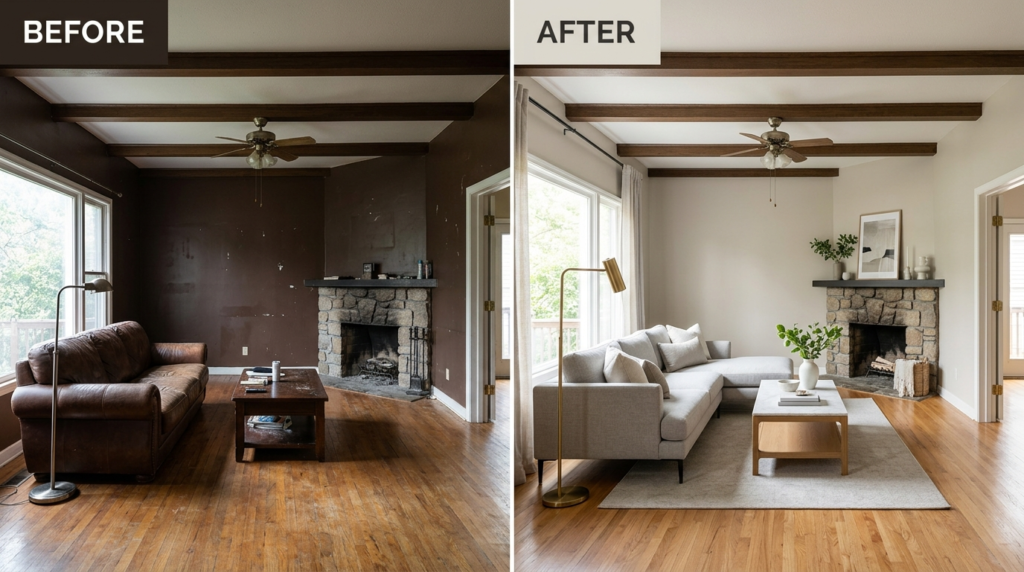
Painting cabinets costs roughly 20% to 30% of replacement. A kitchen that costs $5,000 to paint in Chicago would generally cost $15,000 to $40,000 or more to replace with new installed cabinets.
| Option | Typical Chicago Cost | Timeline | Best When |
|---|---|---|---|
| Painting | $2,500 to $9,000 | 3 to 7 days | Boxes and doors are solid, you want a new look |
| Refacing (new doors, veneered boxes) | $8,000 to $20,000 | 1 to 2 weeks | Doors are warped or dated but layout works |
| Full replacement | $15,000 to $40,000+ | 3 to 8 weeks | Layout is changing or boxes are failing |
The test is the boxes, not the doors. If the cabinet boxes are solid, square, and well attached, painting is nearly always the better value. If the boxes are water-damaged, sagging, or made of crumbling particle board, paint is money spent on something that needs replacing anyway.
What Drives the Price of a Cabinet Job
- Piece count. Every door and drawer front gets removed, labeled, cleaned, sanded, primed, and coated. More pieces, more hours.
- Door style. Flat slab doors are quickest. Raised panel and heavily routed doors have profiles and corners that slow every step.
- Current finish. Factory-cured varnish and old oil finishes need deglossing and a bonding primer before anything will stick.
- Cabinet material. Solid wood and MDF take paint readily. Laminate and thermofoil need specialty primers and extra care.
- Grease and condition. Cabinets around the stove often carry years of cooking residue that must be fully degreased first.
- Spray or brush. Spraying needs masking, containment, and often an off-site shop, which costs more and looks better.
- Color change. Dark wood going to white usually needs a stain-blocking primer so tannins do not bleed through.
- Extras. Interiors, islands in a second color, new hardware, and filling old hardware holes are all additional.
Expert Insight
The question we hear most is whether painted cabinets hold up. They do, when the prep is right. In our experience, nearly every failed cabinet job comes back to the same two shortcuts: skipping the degrease, or skipping the bonding primer over an old varnished finish. Both are invisible in a photo on day one. Both show up as chipping around the handles and the sink within a year. We would rather spend an extra day on prep than get called back in eight months.
Want a Real Per-Door Number?
We quote cabinets by piece count, not guesswork. The estimate is free, we count every door and drawer front, check the existing finish, and put the full prep plan in writing before you commit.
Do You Need to Sand Cabinets Before Painting?
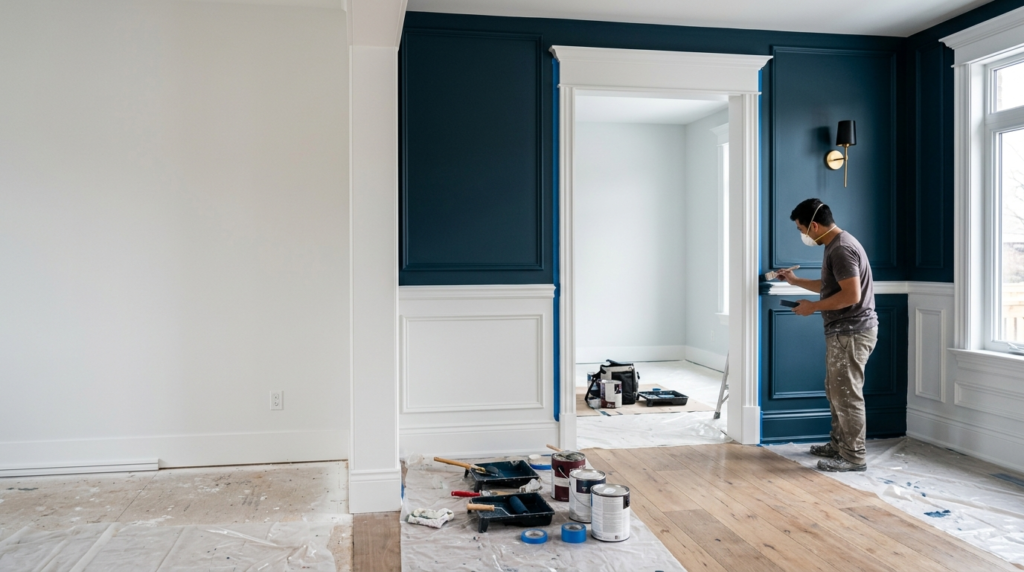
Yes. Cabinets need a thorough degrease followed by a scuff sand, then a bonding primer. You are not sanding the finish off, you are dulling the surface so the primer can grip it. On a factory-finished cabinet, skipping this step is the single most common reason a paint job fails.
The full professional prep sequence looks like this:
- Remove and label every door, drawer front, and piece of hardware
- Degrease all surfaces, with extra attention around the stove and sink
- Fill any dents, old hardware holes, and damaged edges
- Scuff sand every surface, including profiles and edges
- Vacuum and tack-cloth away all dust
- Apply a bonding primer, with a stain-blocking primer over dark wood
- Sand lightly between coats for a smooth finish
- Apply two coats of a cabinet-grade enamel
- Allow proper cure time before rehanging and reloading
For how the same prep thinking applies to walls, see our guide to house painting cost in Chicago, which covers where prep time actually goes.
Spray or Brush: Which Finish Is Better?
Spraying gives the smoothest finish on cabinets, close to a factory surface, because it leaves no brush or roller texture. Brushing costs less and can look good on simple doors, but the texture is visible under kitchen light, especially on flat slab fronts.
| Method | Finish | Cost | Best For |
|---|---|---|---|
| Sprayed (HVLP) | Smooth, factory-like, no texture | Higher | Any kitchen where the finish is the point |
| Brush and roll | Light visible texture | Lower | Budget refresh, rental turnover, simple doors |
| Hybrid (sprayed doors, brushed boxes) | Smooth where it shows most | Middle | Keeping cost down without losing the look |
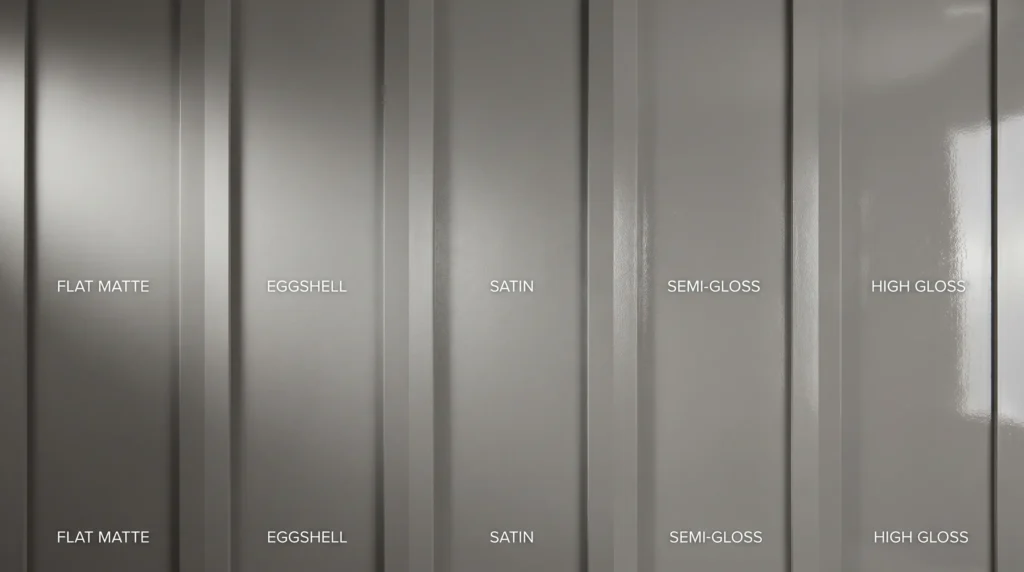
The paint matters as much as the method. Cabinet-grade enamels are formulated to level out and cure hard, which is what resists fingernails and cleaning. Standard wall paint on cabinets stays soft and marks easily, no matter how it is applied.
How Long Does Cabinet Painting Take?
A professional cabinet painting project takes 3 to 7 working days for most Chicago kitchens. Small kitchens can finish in 3 to 4 days, while large kitchens with 40 or more pieces take a week or more.
| Stage | Typical Time |
|---|---|
| Removal, labeling, and masking | Half a day to 1 day |
| Degrease, fill, and sand | 1 to 2 days |
| Priming and drying | 1 day |
| Two finish coats with drying between | 1 to 2 days |
| Reassembly and hardware | Half a day |
Your kitchen stays usable throughout. Counters, sink, and appliances remain available, though you will be without cabinet doors for most of the project. Cabinet enamels continue hardening after they feel dry, so treat the doors gently for the first two to three weeks and avoid stacking heavy items against fresh surfaces.
Can You Paint Laminate or Thermofoil Cabinets?
Yes, laminate and thermofoil cabinets can be painted, but they need a specialty bonding primer because there is no wood grain for paint to key into. Thermofoil also needs checking first: if the foil layer is peeling or lifting from the substrate, painting over it will not fix that, and the loose areas have to be addressed before any coating goes on.
Expect laminate and thermofoil to cost slightly more than solid wood cabinets because of the extra primer step and the slower, more careful handling.

What a Real Cabinet Quote Should Include
A trustworthy Chicago cabinet quote should be written and specific. Look for all of these:
- The piece count: how many doors and how many drawer fronts
- Whether cabinet boxes, interiors, and the island are included
- The prep plan in plain language: degrease, fill, sand, prime
- Application method: sprayed, brushed, or hybrid
- The exact paint and primer product lines being used
- Number of coats
- Project timeline and how long you will be without doors
- Whether hardware is reinstalled, replaced, or holes filled
- Proof of insurance and, for pre-1978 homes, lead-safe certification
- Written workmanship warranty
Mistakes That Ruin a Cabinet Paint Job
- Skipping the degrease. Kitchen grease is invisible and it stops paint bonding. This is the number one cause of failure.
- Painting over varnish without a bonding primer. The finish will peel off in sheets, often along a whole door edge.
- Using wall paint instead of cabinet enamel. It never cures hard enough and marks within weeks.
- Rehanging doors too early. Fresh enamel that feels dry is not fully cured, and doors stuck shut on tacky paint tear when opened.
- Not labeling the doors. Cabinet doors are not interchangeable. Unlabeled doors mean hinge holes that no longer line up.
- Choosing a quote on price alone. On cabinets, the cheap bid is almost always the one skipping prep, and prep is the job.
Get a Cabinet Painting Quote
Cabinet pricing comes down to piece count, door style, and the condition of the current finish. Those three things can only be judged properly in person, which is why we quote cabinets on site rather than over the phone.
Transform & Restore Painting is a locally owned painting company based in Oak Lawn, serving homeowners across Chicagoland. We quote cabinets by piece count so you can see exactly what you are paying for, name the primer and enamel on the estimate, and back our work with a 2-year workmanship warranty. Our customers have given us a 5-star rating on Google.
Ready for a real number?
Book your free cabinet painting estimate or call (708) 955-0339. We will count the doors, check the existing finish, and give you a written price with the full prep plan in writing.

Frequently Asked Questions
How much does it cost to paint kitchen cabinets in Chicago?
Professional cabinet painting in Chicago costs about $2,500 to $9,000 for most kitchens in 2026, or roughly $100 to $250 per door and drawer front. A small galley kitchen runs $2,500 to $5,000, while a large kitchen with an island can reach $12,000 or more.
Is it cheaper to paint or replace kitchen cabinets?
Painting costs roughly 20% to 30% of replacement. A kitchen that costs around $5,000 to paint would typically cost $15,000 to $40,000 or more to replace. Painting makes sense whenever the cabinet boxes are structurally sound.
How long does cabinet painting take?
Most Chicago cabinet projects take 3 to 7 working days. Your kitchen stays usable the whole time, though you will be without cabinet doors for most of the project while they are prepped, primed, and coated.
Do you have to sand cabinets before painting?
Yes. Cabinets need degreasing and a scuff sand before priming. The goal is to dull the existing finish so the bonding primer can grip it, not to remove the finish entirely.
How many coats of paint do kitchen cabinets need?
Cabinets typically need one coat of bonding primer plus two coats of cabinet-grade enamel. Dark wood going to a light color may need an extra primer coat to stop tannin bleed.
Is spraying or brushing better for cabinets?
Spraying gives the smoothest, most factory-like finish because it leaves no brush texture. Brushing costs less and works for simple door styles, but the texture is visible under kitchen lighting.
Do painted cabinets chip?
Properly prepped cabinets finished in a cabinet-grade enamel hold up for many years. Chipping around handles and the sink almost always traces back to skipped degreasing or a missing bonding primer, not to the paint itself.
Can laminate or thermofoil cabinets be painted?
Yes, with a specialty bonding primer. Thermofoil should be inspected first, because peeling or lifting foil has to be addressed before painting rather than coated over.
Get Your Kitchen Cabinets Quoted
Transform & Restore Painting is a locally owned painting company based in Oak Lawn, serving homeowners across Chicagoland. We name the primer and enamel on the estimate, prep properly, and back the work with a 2-year workmanship warranty. Our customers have given us a 5-star rating on Google.
Serving Oak Lawn, Chicago, Burbank, Evergreen Park, Chicago Ridge, Palos and Orland Park.